Best Sudoku Books for Kids Ages 6–8
Sudoku is a great first logic puzzle for a young child — but only if the grid size actually matches where they are. Here's how the sizes differ, and how to pick the right starting point.
4×4 vs. 6×6 vs. 9×9: what the grid size actually means
Every sudoku grid follows the same core rule — no repeated number in any row, column, or box — but the grid size changes how much a child has to track at once. A bigger grid isn't just "harder," it asks for more sustained attention and scanning, which is exactly why grid size matters more than age alone when picking a book.
Numbers 1–4
The gentlest starting point. Small enough to solve in a minute or two, ideal for a child just learning the rule.
Numbers 1–6
A natural next step once 4×4 feels easy — slightly more to track, without jumping straight to a full-size grid.
Numbers 1–9
The standard adult sudoku size. A real milestone for a child who has outgrown the smaller grids.
How to know when it's time to move up
Signs a child is ready for the next grid size
- They're finishing puzzles quickly, without getting stuck
- They seem bored rather than challenged
- They're solving without needing to double-check their work as often
There's no rush. A child can stay at one grid size for weeks or months — repetition at the right difficulty is what builds real confidence, not skipping ahead.
A series built around this exact progression
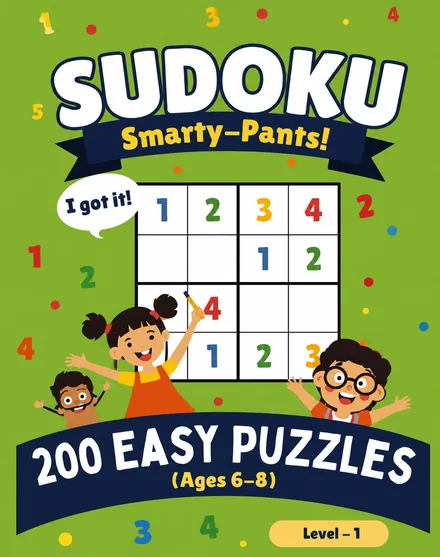
Our Sudoku Smarty-Pants! series has three levels for ages 6–8, each stepping up the grid size and difficulty as a child is ready for it.
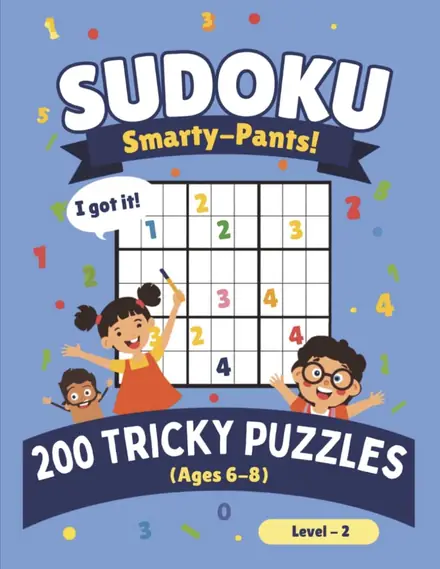
Level 2
200 tricky puzzles that add a few more empty cells once the basics feel comfortable.
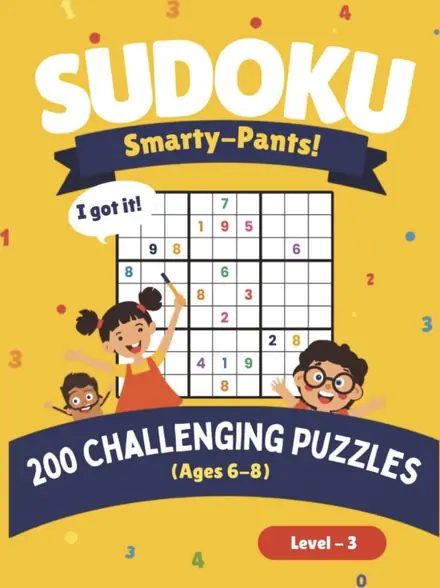
Level 3
200 challenging puzzles including full 9×9 grids, for a child ready to say "I got it!"
Not sure where to start? For most children ages 6–8 who have never done sudoku, Level 1 is the right entry point — even a strong reader benefits from starting on the smaller grid.
Frequently Asked Questions
What size sudoku grid should a 6-year-old start with?
A 4×4 grid is the easiest starting point, using only the numbers 1 through 4. It teaches the core rule of sudoku without the visual overload of a full 9×9 grid.
What's the difference between a 4×4, 6×6, and 9×9 sudoku grid?
The grid size determines the range of numbers used and how much a child has to scan and track at once. A 4×4 grid uses numbers 1–4, a 6×6 grid uses 1–6, and a standard 9×9 grid uses 1–9 with more rows, columns, and boxes to keep track of simultaneously.
How do I know when my child is ready to move up a grid size?
If they're finishing puzzles at their current grid size quickly and without help, and seem bored rather than challenged, that's usually the sign to move up. Moving up too early can cause frustration, so it's fine to stay at one size for a while.
Does sudoku actually help kids learn, or is it just a game?
Sudoku builds logical thinking, number recognition, and patience with a problem that takes more than a few seconds to solve — skills that carry over well beyond the puzzle itself, even though it plays like a game.
Not Sure Which Level Fits Your Child?
Tell us a bit about their experience with sudoku and we'll point you to the right level.
Contact Aberoc Books