Puzzle Books for Teens Who Hate Worksheets
Hand a teenager a puzzle book that feels like a worksheet, and it ends up in a drawer by page three. Here's what actually separates a puzzle book a teen will finish from one that feels like homework with a fun cover.
Why so many "teen" puzzle books feel like homework
A lot of puzzle books marketed to teens are really kids' activity books with the cover art aged up. The grid sizes, the difficulty, and the page layout underneath often haven't changed much — same repetitive format, just relabeled for an older reader. Teenagers notice the difference between a book built for them and one that was built for someone younger and rebranded.
What actually holds a teen's attention
What to look for
- Variety of puzzle types — not the same format repeated forty times
- Real difficulty — puzzles that require actual thought, not oversized grids meant for a younger reader
- A difficulty curve within the book — an easier start, building to a genuine challenge
- Design that doesn't look babyish — clean, modern page layout rather than cartoon-heavy graphics
- Solutions included — so a teen can check their own work without needing an adult
Variety beats repetition
A 200-page book of nothing but the same sudoku format gets monotonous fast, even for someone who likes sudoku. Puzzle books that mix several logic-based formats — sudoku, kakuro, cryptograms, codewords, mazes — keep introducing a new kind of problem to solve, which tends to hold attention far longer than one repeated puzzle type.
Difficulty has to be real
If every puzzle in the book can be solved in under a minute, a teen will feel like the book was written for someone much younger — because it probably was, originally. A mixed difficulty range, including puzzles that take real effort, treats a teenager like the capable solver they actually are.
Two options built with this in mind
Both of these were designed specifically for teens 13–17, not adapted down from an adult book or up from a kids' one.
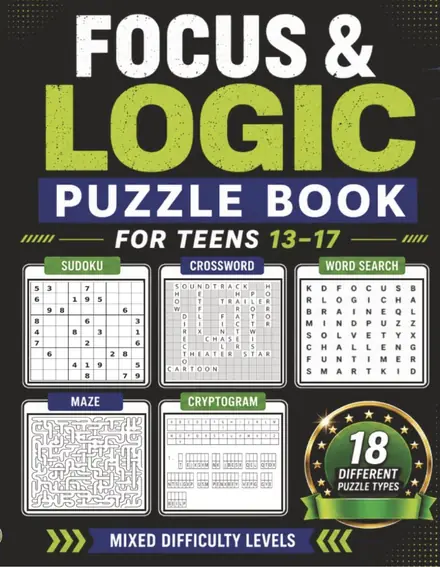
Focus & Logic Puzzle Book
Sudoku, kakuro, cryptograms, codewords, and more, at mixed difficulty levels.
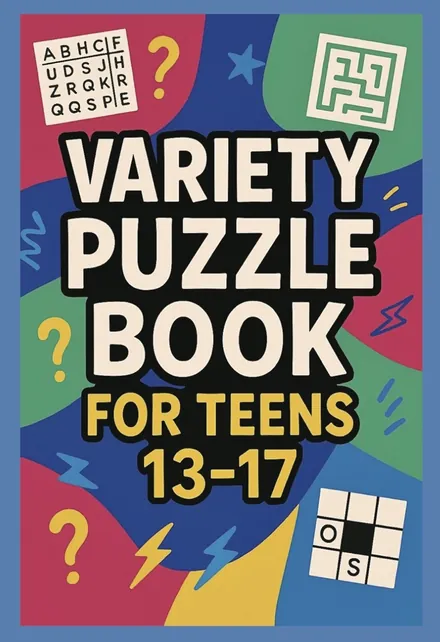
Variety Puzzle Book
Word grids, mazes, and crosswords, mixed so no puzzle repeats back to back.
For the full breakdown of both titles side by side, visit our puzzle books for teens page.
Frequently Asked Questions
Why do so many teen puzzle books feel like homework?
Many are built from the same templates as kids' activity books, just relabeled for an older age group, without changing the puzzle types, difficulty, or page design to match what a teenager actually finds engaging.
What puzzle types work best for teens?
A mix of logic-based puzzle types — sudoku, kakuro, cryptograms, codewords — tends to hold a teen's attention better than a single repeated format, since it keeps introducing a new kind of problem to solve rather than the same pattern forty times in a row.
Should a teen puzzle book be harder than a kids' book?
Yes. A puzzle book pitched at teens should include genuinely challenging puzzles, not just larger versions of grids meant for a much younger reader. Mixed difficulty levels within the same book let a teen warm up and then get challenged.
Is a themed puzzle book better than a general one for a teen?
It depends on the teen. A themed book built around a specific interest can feel more personal as a gift, while a general logic-and-variety book works well for a teen who just wants a mental challenge without a specific theme attached.
Not Sure Which Book Fits Your Teen?
Tell us a bit about the reader and we'll point you to the right title.
Contact Aberoc Books